Aquaholic Blog Archives
(Listed in order of most recently published)
Durusdinium: The 'Superior' Symbiont?'Shuffling' and 'Switching' Symbionts
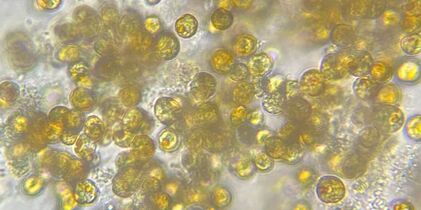
Most corals form mutualistic relationships with multiple species of algal symbionts (or zooxanthellae) and are flexible in the species of zooxanthellae that they host (Baker et al., 2004; Muller-Parker et al., 2015; Toller et al., 2001a; Toller et al., 2001b). Up until the last couple of decades, it was thought that corals could not ‘shuffle’ (enable a background zooxanthella strain to become dominant) or ‘switch’ (uptake new zooxanthellae from the environment via indirect transmission) between symbionts ...
|
REEFreshments® Now Available for Pre-Order at SaltwaterAquarium.comYou can now find our REEFreshments® REVIVE™ Live Zooxanthellae at SaltwaterAquarium.com! SaltwaterAquarium.com offers a wide variety of product essentials for all types of marine aquariums. They are a one-stop-shop for all of your aquarium needs. From aquariums and sumps, to filtration equipment, test kits, and live feeds, they've got you covered. And, now, you can also purchase our ...
|
New Strains of Zooxanthellae for 'Reviving' Bleached Aquarium InhabitantsEnhancing the Efficacy of REVIVE™: Live Zooxanthellae
In the wild when a coral bleaches (i.e., expels its zooxanthellae) it has the opportunity to uptake new zooxanthellae from the water column (via indirect transmission) and heal. In contrast, when corals bleach in aquariums the expelled zooxanthellae are effectively removed via modern mechanical filtration, inhibiting corals from reuptaking the zooxanthellae. The main goal of REVIVE™ is to add live zooxanthellae back into the aquarium, providing corals with the opportunity to ...
|
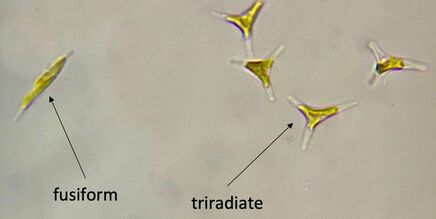
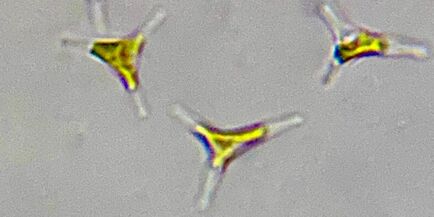
Chasing the Cruciform Morphotype in Phaeodactylum tricornutumP. tricornutum PleomorphismOne of the more interesting microalgae that we grow at Aquaholic Aquaculture is Phaeodactylum tricornutum. P. tricornutum is a pennate diatom that has a unique pleomorphic nature. Unlike most diatoms, P. tricornutum is weakly silicified, and, because of this, its cell wall has exceptional plasticity, enabling the diatom to change its shape (Tesson et al., 2009). P. tricornutum has four distinct morphotypes: (1) Ovoid (also referred to as Oval or Round), (2) Fusiform, (3) Triradiate, and (4) Cruciform ...
|
10 Years! Cheers!!Aquaholic Aquaculture was founded ten years ago on April 22, 2015. Our company was established on Earth Day as a symbolic representation of our mission to foster marine conservation and sustainability within the aquarium industry through marine ornamental aquaculture. Aquaholic Aquaculture's mission is grounded in a love for the aquarium hobby and a devotion to marine conservation. At Aquaholic Aquaculture, all of our live products (from live feeds to marine fish and coral) are 100% aquacultured.
Our small family business has grown so much this past decade. When Aquaholic ... |
Commercial Production of Zooxanthellae for the Aquarium IndustryFor nearly a decade we have experimented with growing various members of the family Symbiodiniaceae (i.e., zooxanthellae) searching for species suitable for commercial production for the aquarium industry. After much research and trial-and-error experimentation, we finally found a handful of suitable species and worked to produce them in mass culture. In 2017, our selected zooxanthella cultures were ready for commercial distribution, and we released our new product: REVIVE™: Live Zooxanthellae.
Every strain of zooxanthella that we have cultured at Aquaholic Aquaculture® has ... |
Successful Sexual Propagation of Acanthophyllia deshayesianaAcanthophyllia deshayesiana are large, solitary-polyp stony corals that are known for their fluffy flesh and array of vibrant colors. They are eye-catching corals, and a species that many aquarists aspire to own.
For most corals, asexual propagation (i.e., fragmentation) is the easiest and fastest method of farming. However, ... |
Coral Farming at ACI Aquaculture, and the
|
A Closer Look at REEFreshments: REVIVE™
|
Clarifying the Taxonomy of ZooxanthellaeClades to Genera
Technically the term “zooxanthellae” has no taxonomic meaning, but it is used colloquially to describe the symbiotic golden-colored dinoflagellates that reside within animals (such as corals, anemones, clams, etc.). Zooxanthellae’s small size (the majority are <11 µm in diameter) and similar morphology have made them difficult to study and catalogue, as it is inordinately challenging to ... |
Zooxanthellae and Their Relationship
|
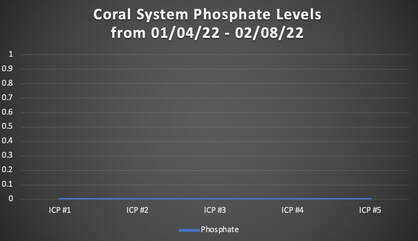
REEF RECIPE Phosphate Experiment -
|
NEW REEFreshments® 64 oz. Dispenser Pump Jugs are NOW AVAILABLE!The Pros and Cons of our Original 64 oz. Glass Growlers
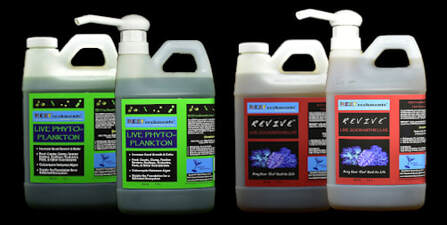
About a year ago we added a new bulk-quantity packaging option for our REEFreshments: Live Phytoplankton and REEFreshments: REVIVE™ Live Zooxanthellae. The new packaging option was a 64 oz. glass growler. We chose these glass growlers, because we felt that they were the most appropriate choice of ... |
Introducing: REEF RECIPE:
|
|
|
|